

Flying With Kids: Best Flight Times, Seats, and Connection Tips
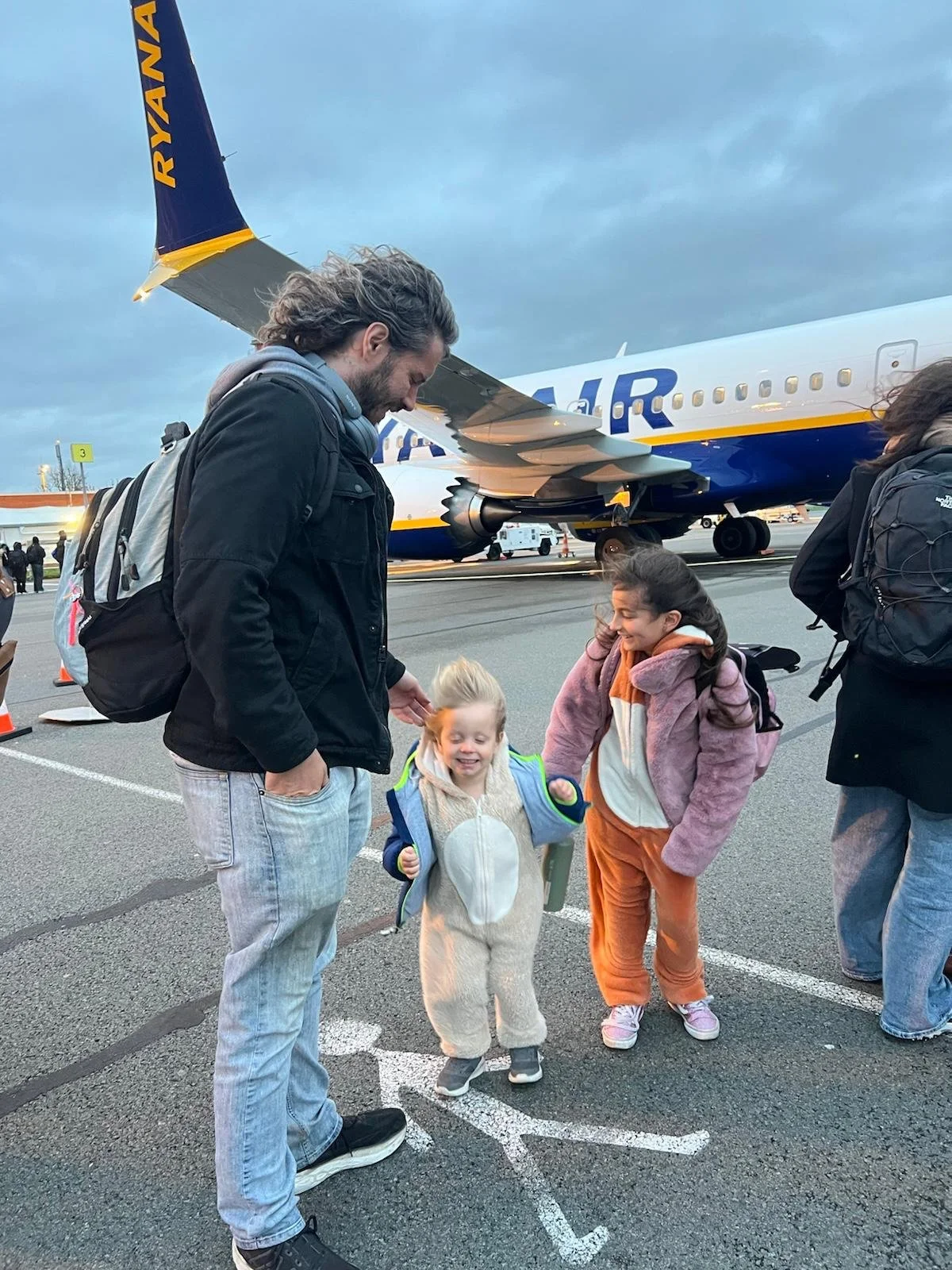
Flying with kids can feel intimidating, whether it is your first trip or your fifteenth.
Flight timing. Seat selection. Connection windows.
These small decisions shape your entire travel day.
We have flown many times with babies, toddlers, and elementary-age kids. We have not yet traveled with teens as parents, but we remember flying as teens ourselves and think ahead to what will matter in those years.
It is never perfectly smooth.
But thoughtful planning makes a real difference.
Here is what has worked for us.
Choosing the Best Flight Times for Kids
Flight timing matters more than most parents realize.
Babies and Toddlers
Consider flight times carefully. With babies and toddlers, early morning flights can set you up for success.
You cannot avoid every meltdown, but little ones are often well rested and in their best moods early in the day. Early departures are also less likely to be delayed, helping you avoid long airport waits with a tired child.
Babies and toddlers often do well on overnight flights, too. These flights tend to be quieter and calmer, and they align with natural sleep schedules. Many children fall asleep shortly after takeoff.
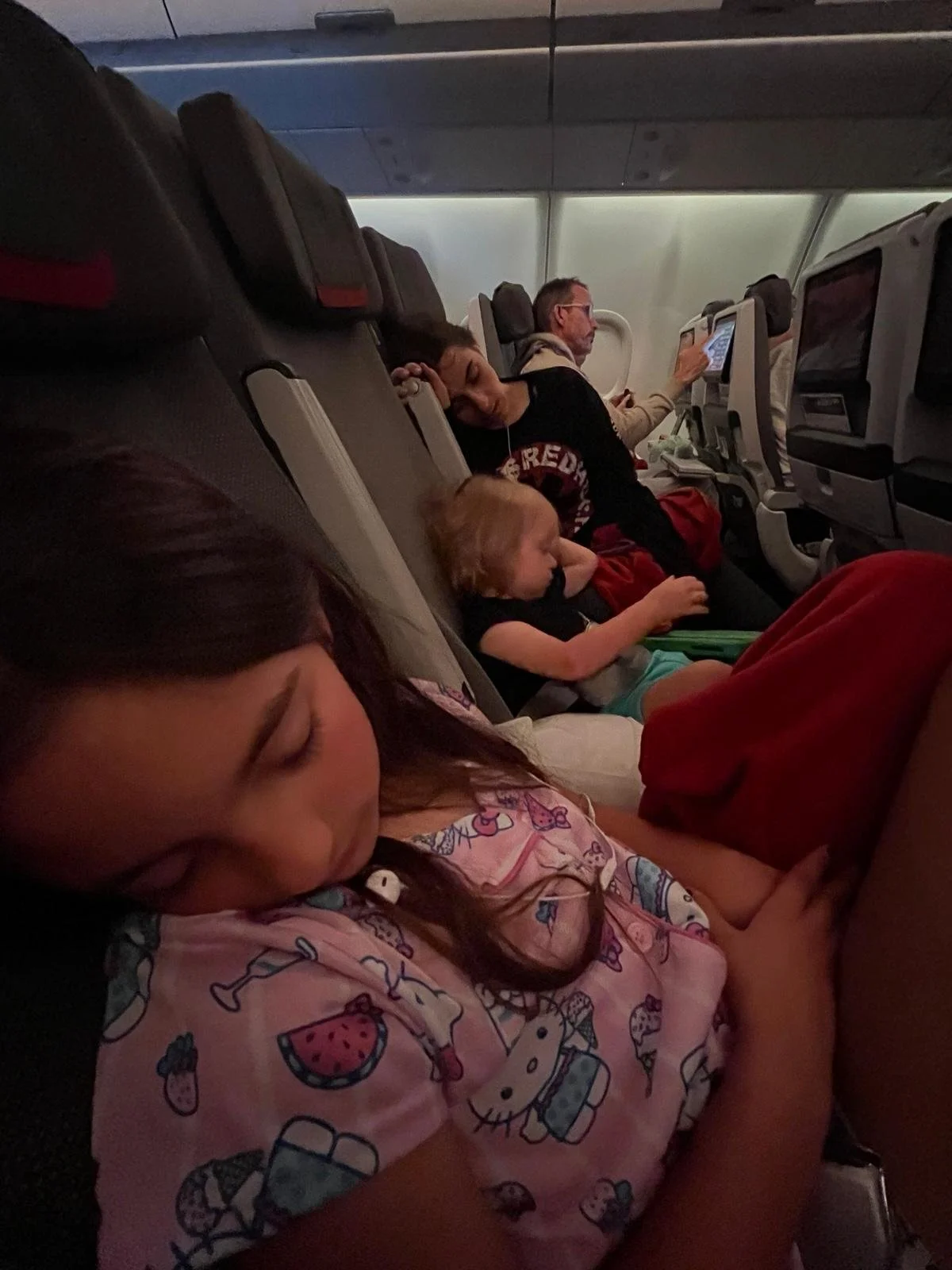
If you choose to fly at other times during the day, consider your child’s nap schedule. Waiting in a long security line with an exhausted three year old is not ideal. If you can time your flight so your little one is ready to nap once you are in the air, they get the rest they need, and you get a much needed break after navigating the airport.
Elementary Age Kids
As kids get older, they tend to become more flexible with flight times.
Elementary-age kids often do best on mid morning or early afternoon flights. You avoid early wake ups, everyone gets fed, and they are happy campers.
Older Kids and Teens
We have not yet traveled with teens as parents, but we remember those years well.
Older kids and teens usually handle afternoon or overnight long haul flights well. They can sit for longer periods, entertain themselves, and manage unexpected delays more easily.
And let’s be honest. The older kids get, the more they will dislike extremely early flights.
Considering Arrival Times
Flight departure time matters, but arrival time can shape your entire first day.
Many hotels do not allow check in until 2 or 3 in the afternoon. After a long flight, arriving at 8 in the morning with tired kids and all your luggage can feel overwhelming.
If you can, try to plan your arrival for a time when you will not be waiting around exhausted and without access to your room.
In some cases, it may be worth booking an extra night at the beginning of your stay so your room is ready when you land. It is an added expense, but after an overnight flight or long travel day, having immediate access to a shower, a nap, and a reset can be invaluable.
When that is not possible, have a simple plan. Research nearby parks, casual restaurants, or open spaces where kids can move and reset. Even knowing where you will grab coffee or a snack can make those in between hours feel manageable.
Small decisions around arrival can make a big difference in how your trip begins.
Seat Selection Tips for Family Travel
Once you have chosen your flight, seat selection is the next important step.
Flying With Babies
Many airlines allow you to purchase a seat and bring an FAA-approved car seat. Check with your airline if this option interests you.
We have only used a car seat once when an airline required that we buy our one year old a seat and a car seat was provided. Every other time we have traveled with babies, we have done one of two things:
Taken turns holding our little one for the duration of the flight
Taken advantage of bassinets offered by many airlines on long haul flights
Holding your baby saves money since you avoid purchasing an extra seat.
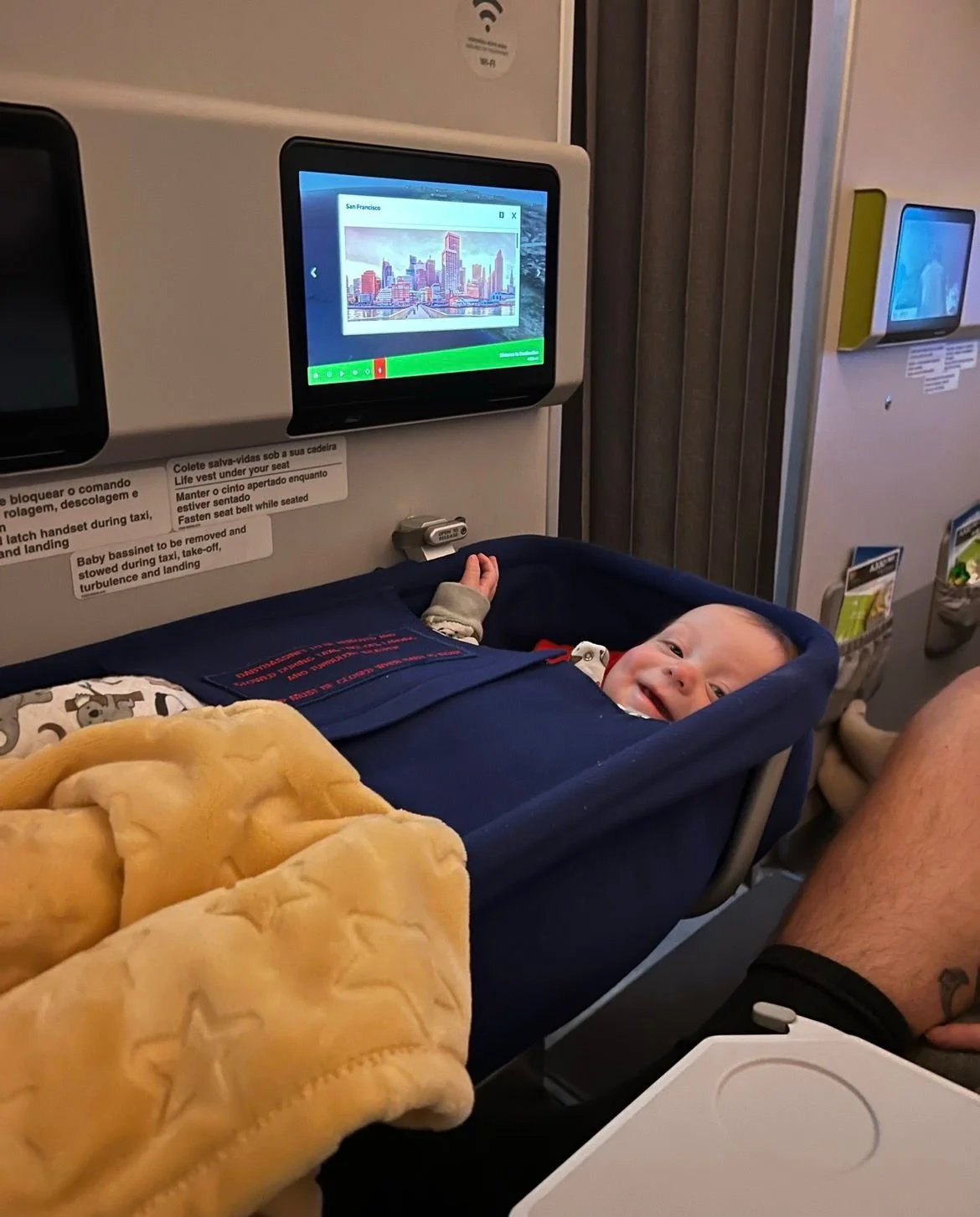
To use a bassinet, you will need to book seats in a bulkhead row, which usually comes with extra legroom. The bassinet attaches to the solid wall separating cabins.
After booking your seats, you typically need to call the airline directly to request one. Be sure to check size and weight limits, as these vary by airline, and confirm availability at check in and again at the gate.
Bassinets are never guaranteed, but we have been fortunate to use them several times without issue.
One important note. Bulkhead rows do not allow under seat storage, so pack your carry on so essentials are easy to access during the flight.
Flying With Kids Who Have Their Own Seats
For kids who require their own seats, we recommend paying for seat selection whenever possible.
If you do not, you are leaving seating up to chance. With young kids, gate agents usually do their best to seat families together, but there are no guarantees, especially if the flight is full.
This can mean awkward requests to swap seats with strangers.
As kids get older, airlines may be less proactive about keeping your family together. Buying seats can be costly, but it is often worth it to ensure a smooth, less stressful experience.
The exception is traveling with older kids who can sit independently if needed. You know your child best.
Choosing a Practical Seat Setup for Family Flights
When choosing seats, think about what works best for your family.
For toddlers, window seats create a natural barrier and help prevent aisle escapes.
Consider the plane layout, too. As a family of four, we love a 2-4-2 configuration where we take the middle four seats and stay together.
On other layouts, we will split into two groups or book three seats together with the aisle across from us. Parents can swap throughout the flight, giving everyone a chance to reset and enjoy a few quiet moments.
Why Connection Times Matter When Flying With Kids
Avoid tight connections when possible.
Everything takes longer with kids. What takes you five minutes can easily take your family twenty.
Diaper changes.
Bathroom breaks.
Snack stops.
On top of that, traveling with kids inevitably means more things to carry. Strollers and car seats. Backpacks and carry-ons. It all has to get from gate to gate.
Small delays lead to big stress, and no matter how hard we try, we often transfer that stress to our kids.
We aim for:
90 minutes or more for domestic layovers
Two to three hours for international flights
It Does Not Have to Be Perfect
You will not always get the departure time expected.
You may not always get the ideal seats.
Connections may feel tighter than you hoped.
Do the best you can with what is available. Make thoughtful choices where you can. Build in extra time when possible.
And remember that flexibility matters just as much as planning.
Flying with kids is rarely perfect.
But when you step off that plane together, ready for whatever adventure comes next, you will be glad you went.
